
By: Karina Helle
|
Report No.
|
1135 |
|
Discipline/Origin
|
Marine |
|
Well
|
Songesand |
|
Date created
|
2018/10/11 |
|
Project Phase
|
Planning |
|
LL Type/Classification
|
PSA Q&A |
Transocean Arctic
N/A PSA Q&A LL with Wellesley
Songesand (35/4-2) – N/A
PSA: Q
Angående Smartblue-løsningen. Ber om en nærmere redegjørelse for valget opp mot døgnkontinuerlige marine overvåkingssentraler og hvordan dette systemet blir kontinuerlig overvåket og hvordan varsel/alarmer blir fulgt opp.
PSA: A
The Framework HSE regulation (Rammeforskriften) section 57 describes how the operator shall monitor all activity inside of safety zones and outside the zone when such activity can result in a safety risk. Section 58 describes how warnings and notifications in connection with entry into safety zones shall be conducted. In addition the Norsk Olje og Gass – Guideline 064 ‘Etablering av områdeberedskap’ defines a set of performance requirements for DSHA #4 Ship Collision.
Historically on the Norwegian Continental Shelf various types of surveillance have been used. The most common one is Equinor marine/Operation that handles surveillance for most operators. The surveillance equipment/system used by Equinor is Vissim. During 2013, Equinor did not have spare capacity for smaller operators and other solutions had to be used. The latest of these new solution is the autonomous Smartblue system from Well Expertise. The system is developed together with Raytheon Anschutz to meet the requirements on the NCS.
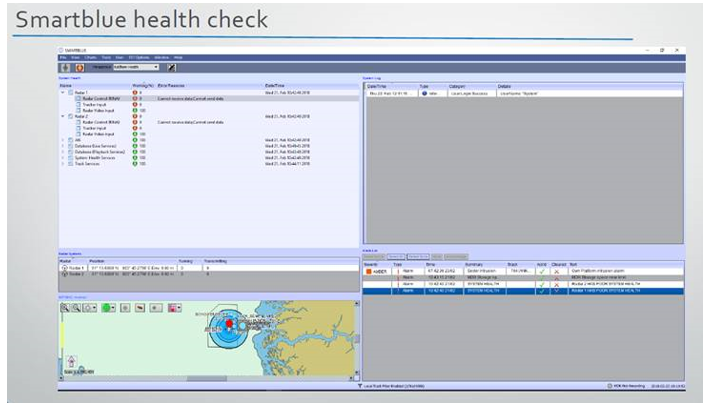
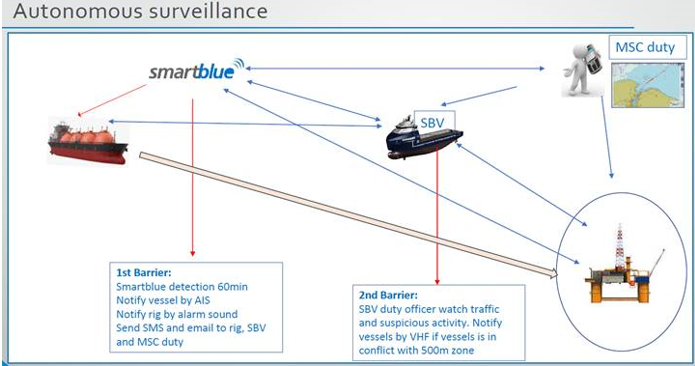
The Smartblue autonomous surveillance system is set up to notify and alert the approaching vessel, rig, SBV and onshore duty via a combination of AIS alerts and alarms, e-mails and SMS-messages. Notifications are sent out if unauthorised ships are closer than 5nm of the rig. Separate 1hr notifications are sent to approaching vessels (and rig, SBV and onshore duty) if the CPA – Closest Point of Approach limit of less than 1nm are exceeded. [Fig: Autonomous Surveillance] The onshore MSC duty person has no direct actions or role in a ship collision scenario, this is managed by the OIM, captain on SBV and the emergency response organisation. The MSC duty person will receive the same notifications as the rig and the SBV, although his main role is to ensure technical functionality of the system at all times. He will also receive messages from the system if main functions are down. Daily health checks of the system are conducted. [Smartblue health check] On Oct 9th Wellesley had been in operation for 150 days. During this period 173 ships passed closer to the rig than 5 nautical miles. The vast majority of these has been offshore vessels and fishing vessels in transit. The Deepsea Bergen is currently west of our Grosbeak West location and this has increased the number of passing PSV`s. 11 ships have been given a 1hr notice and less than 1nm CPA.
The system has been 100% up and running during the 150 days. The link to shore has been down during a 2,5hrs power blackout on the rig, but was still operational offshore when this happened.
In addition to reliable performance and system uptime, the feedback from offshore users (rig and SBV) have been positive, we believe this to be application of new technology with a smart user interface which reduces potential for human error and misinterpretation.
Transocean Arctic
Question
Angående Smartblue-løsningen. Ber om en nærmere redegjørelse for valget opp mot døgnkontinuerlige marine overvåkingssentraler og hvordan dette systemet blir kontinuerlig overvåket og hvordan varsel/alarmer blir fulgt opp.
Answer
The Framework HSE regulation (Rammeforskriften) section 57 describes how the operator shall monitor all activity inside of safety zones and outside the zone when such activity can result in a safety risk. Section 58 describes how warnings and notifications in connection with entry into safety zones shall be conducted. In addition the Norsk Olje og Gass – Guideline 064 ‘Etablering av områdeberedskap’ defines a set of performance requirements for DSHA #4 Ship Collision.
Historically on the Norwegian Continental Shelf various types of surveillance have been used. The most common one is Equinor marine/Operation that handles surveillance for most operators. The surveillance equipment/system used by Equinor is Vissim. During 2013, Equinor did not have spare capacity for smaller operators and other solutions had to be used. The latest of these new solution is the autonomous Smartblue system from Well Expertise. The system is developed together with Raytheon Anschutz to meet the requirements on the NCS.
The Smartblue autonomous surveillance system is set up to notify and alert the approaching vessel, rig, SBV and onshore duty via a combination of AIS alerts and alarms, e-mails and SMS-messages. Notifications are sent out if unauthorised ships are closer than 5nm of the rig. Separate 1hr notifications are sent to approaching vessels (and rig, SBV and onshore duty) if the CPA – Closest Point of Approach limit of less than 1nm are exceeded. [Fig: Autonomous Surveillance] The onshore MSC duty person has no direct actions or role in a ship collision scenario, this is managed by the OIM, captain on SBV and the emergency response organisation. The MSC duty person will receive the same notifications as the rig and the SBV, although his main role is to ensure technical functionality of the system at all times. He will also receive messages from the system if main functions are down. Daily health checks of the system are conducted. [Smartblue health check] On Oct 9th Wellesley had been in operation for 150 days. During this period 173 ships passed closer to the rig than 5 nautical miles. The vast majority of these has been offshore vessels and fishing vessels in transit. The Deepsea Bergen is currently west of our Grosbeak West location and this has increased the number of passing PSV`s. 11 ships have been given a 1hr notice and less than 1nm CPA.
The system has been 100% up and running during the 150 days. The link to shore has been down during a 2,5hrs power blackout on the rig, but was still operational offshore when this happened.
In addition to reliable performance and system uptime, the feedback from offshore users (rig and SBV) have been positive, we believe this to be application of new technology with a smart user interface which reduces potential for human error and misinterpretation.
EDITOR
CLOSE LL (testing)
New Lesson Learned
-
- PROJECT PHASE
- Operational
- Planning
- Reporting
- CLASSIFICATION
- Positive
- Negative
- Origin
- Own Experience
- Experience Transfer Meeting
- NEA Q&A
- PSA Q&A
- PSA Findings
- DMF
- Norog
-

- RIG
 Borgland Dolphin
- Island Innovator
- Well
 Oselvar
- Gomez
- PROJECT PHASE
- Operational
- Planning
- Reporting
- CLASSIFICATION
- Positive
- Negative
- Origin
- Own Experience
- Experience Transfer Meeting
- NEA Q&A
- PSA Q&A
- PSA Findings
- DMF
- Norog
-

- RIG
- Island Innovator
- Well
- Gråspett
- PROJECT PHASE
- Operational
- Planning
- Reporting
- CLASSIFICATION
- Positive
- Negative
- Origin
- Own Experience
- Experience Transfer Meeting
- NEA Q&A
- PSA Q&A
- PSA Findings
- DMF
- Norog
-

- RIG
- Deepsea Bergen
- WELL
- Brasse
- Rungne
- PROJECT PHASE
- Operational
- Planning
- Reporting
- CLASSIFICATION
- Positive
- Negative
- Origin
- Own Experience
- Experience Transfer Meeting
- NEA Q&A
- PSA Q&A
- PSA Findings
- DMF
- Norog
-

NO LLs for INEOS- RIG
- Borgland Dolphin
- WELL
- Fat Canyon
- PROJECT PHASE
- Operational
- Planning
- Reporting
- CLASSIFICATION
- Positive
- Negative
- Origin
- Own Experience
- Experience Transfer Meeting
- NEA Q&A
- PSA Q&A
- PSA Findings
- DMF
- Norog
-

- RIG
- Deepsea Yantai
- Well
- Shrek
- PROJECT PHASE
- Operational
- Planning
- Reporting
- CLASSIFICATION
- Positive
- Negative
- Origin
- Own Experience
- Experience Transfer Meeting
- NEA Q&A
- PSA Q&A
- PSA Findings
- DMF
- Norog
-

- PROJECT PHASE
- Operational
- Planning
- Reporting
- CLASSIFICATION
- Positive
- Negative
- Origin
- Own Experience
- Experience Transfer Meeting
- NEA Q&A
- PSA Q&A
- PSA Findings
- DMF
- Norog
-
\n\t\t
- \n\t\t\t\t
- All<\/a><\/li>\n\t\t\t\t
- DNO<\/a><\/li>\n\t\t\t\t
- DEA<\/a><\/li>\n\t\t\t\t
- Faroe<\/a><\/li>\n\t\t\t\t
- INEOS<\/a><\/li>\n\t\t\t\t
- PGNiG<\/a><\/li>\n\t\t\t\t
- Wellesley<\/a><\/li>\n\t\t\t\t
- <\/span>Advanced Search<\/a><\/li>\n\t\t\t<\/ul>\n\n\t\t\t
- \n\t\t\t\t
- \n\t\t\t\t\t\n\t\t\t\t\t
\n\t\t\t\t\t\t\n\t\t\t\t\t\t\t
- \n\t\t\t\t\t\t\t\t
- RIG<\/li>\n\t\t\t\t\t\t\t\t
 Deepsea Yantai<\/a><\/li>\n\t\t\t\t\t\t\t\t
Borgland Dolphin<\/a><\/li>\n\t\t\t\t\t\t\t\t
Deepsea Bergen<\/a><\/li>\n\t\t\t\t\t\t\t\t
Deepsea Nordkapp<\/a><\/li>\n\t\t\t\t\t\t\t\t
Island Innovator<\/a><\/li>\n\t\t\t\t\t\t\t\t
Transocean Arctic<\/a><\/li>\n\t\t\t\t\t\t\t\t
Deepsea Yantai<\/a><\/li>\n\t\t\t\t\t\t\t\t
Borgland Dolphin<\/a><\/li>\n\t\t\t\t\t\t\t\t
Deepsea Bergen<\/a><\/li>\n\t\t\t\t\t\t\t\t
Deepsea Nordkapp<\/a><\/li>\n\t\t\t\t\t\t\t\t
Island Innovator<\/a><\/li>\n\t\t\t\t\t\t\t\t
Transocean Arctic<\/a><\/li>\n\t\t\t\t\t\t\t\t
- <\/li>\n\t\t\t\t\t\t\t\t
- Well<\/li>\n\t\t\t\t\t\t\t\t
 Balcom<\/a><\/li>\n\t\t\t\t\t\t\t\t
Brasse<\/a><\/li>\n\t\t\t\t\t\t\t\t
Canela<\/a><\/li>\n\t\t\t\t\t\t\t\t
Fat Canyon<\/a><\/li>\n\t\t\t\t\t\t\t\t
Grosbeak<\/a><\/li>\n\t\t\t\t\t\t\t\t
Grosbeak West<\/a><\/li>\n\t\t\t\t\t\t\t\t
Hemispheres<\/a><\/li>\n\t\t\t\t\t\t\t\t
Kall\u00e5sen<\/a><\/li>\n\t\t\t\t\t\t\t\t
Gr\u00e5spett<\/a><\/li>\n\t\t\t\t\t\t\t\t
Gomez<\/a><\/li>\n\t\t\t\t\t\t\t\t
Oselvar<\/a><\/li>\n\t\t\t\t\t\t\t\t
Rungne<\/a><\/li>\n\t\t\t\t\t\t\t\t
Shrek<\/a><\/li>\n\t\t\t\t\t\t\t\t
Schweinsteiger<\/a><\/li>\n\t\t\t\t\t\t\t\t
Serin<\/a><\/li>\n\t\t\t\t\t\t\t\t
Songesand<\/a><\/li>\n\t\t\t\t\t\t\t<\/ul>\n\t\t\t\t\t\t<\/div>\n\t\t\t\t\t\t
\n\t\t\t\t\t\t\t
Balcom<\/a><\/li>\n\t\t\t\t\t\t\t\t
Brasse<\/a><\/li>\n\t\t\t\t\t\t\t\t
Canela<\/a><\/li>\n\t\t\t\t\t\t\t\t
Fat Canyon<\/a><\/li>\n\t\t\t\t\t\t\t\t
Grosbeak<\/a><\/li>\n\t\t\t\t\t\t\t\t
Grosbeak West<\/a><\/li>\n\t\t\t\t\t\t\t\t
Hemispheres<\/a><\/li>\n\t\t\t\t\t\t\t\t
Kall\u00e5sen<\/a><\/li>\n\t\t\t\t\t\t\t\t
Gr\u00e5spett<\/a><\/li>\n\t\t\t\t\t\t\t\t
Gomez<\/a><\/li>\n\t\t\t\t\t\t\t\t
Oselvar<\/a><\/li>\n\t\t\t\t\t\t\t\t
Rungne<\/a><\/li>\n\t\t\t\t\t\t\t\t
Shrek<\/a><\/li>\n\t\t\t\t\t\t\t\t
Schweinsteiger<\/a><\/li>\n\t\t\t\t\t\t\t\t
Serin<\/a><\/li>\n\t\t\t\t\t\t\t\t
Songesand<\/a><\/li>\n\t\t\t\t\t\t\t<\/ul>\n\t\t\t\t\t\t<\/div>\n\t\t\t\t\t\t
\n\t\t\t\t\t\t\t- \n\t\t\t\t\t\t\t\t
- PROJECT PHASE<\/li>\n\t\t\t\t\t\t\t\t
- Operational<\/a><\/li>\n\t\t\t\t\t\t\t\t
- Planning<\/a><\/li>\n\t\t\t\t\t\t\t\t
- Reporting<\/a><\/li>\n\t\t\t\t\t\t\t\t
- <\/li>\n\t\t\t\t\t\t\t\t
- CLASSIFICATION<\/li>\n\t\t\t\t\t\t\t\t
- Positive<\/a><\/li>\n\t\t\t\t\t\t\t\t
- Negative<\/a><\/li>\n\t\t\t\t\t\t\t\t
- <\/li>\n\t\t\t\t\t\t\t\t
- Origin<\/li>\n\t\t\t\t\t\t\t\t
- Own Experience<\/a><\/li>\n\t\t\t\t\t\t\t\t
- Experience Transfer Meeting<\/a><\/li>\n\t\t\t\t\t\t\t\t
- NEA Q&A<\/a><\/li>\n\t\t\t\t\t\t\t\t
- PSA Q&A<\/a><\/li>\n\t\t\t\t\t\t\t\t
- PSA Findings<\/a><\/li>\n\t\t\t\t\t\t\t\t
- DMF<\/a><\/li>\n\t\t\t\t\t\t\t\t
- Norog<\/a><\/li>\n\t\t\t\t\t\t\t<\/ul>\n\t\t\t\t\t\t<\/div>\n\t\t\t\t\t\t
\n\t\t\t\t\t\t\t- \n\t\t\t\t\t\t\t\t
- TYPE<\/li>\n\t\t\t\t\t\t\t\t
- Equipment<\/a><\/li>\n\t\t\t\t\t\t\t\t
- Planning<\/a><\/li>\n\t\t\t\t\t\t\t\t
- Operational<\/a><\/li>\n\t\t\t\t\t\t\t\t
- Location specific<\/a><\/li>\n\t\t\t\t\t\t\t\t
- Bit<\/a><\/li>\n\t\t\t\t\t\t\t\t
- Logistics<\/a><\/li>\n\t\t\t\t\t\t\t\t
- Mud<\/a><\/li>\n\t\t\t\t\t\t\t\t
- BHA<\/a><\/li>\n\t\t\t\t\t\t\t\t
- Cement<\/a><\/li>\n\t\t\t\t\t\t\t\t
- QHSE<\/a><\/li>\n\t\t\t\t\t\t\t\t
- Sidetrack design<\/a><\/li>\n\t\t\t\t\t\t\t\t
- Time Estimate<\/a><\/li>\n\t\t\t\t\t\t\t\t
- Shallow Gas<\/a><\/li>\n\t\t\t\t\t\t\t\t
- BOP<\/a><\/li>\n\t\t\t\t\t\t\t\t
- Casing<\/a><\/li>\n\t\t\t\t\t\t\t\t
- Connections<\/a><\/li>\n\t\t\t\t\t\t\t\t
- Rig specific<\/a><\/li>\n\t\t\t\t\t\t\t\t
- Coring<\/a><\/li>\n\t\t\t\t\t\t\t\t
- Cut & pull<\/a><\/li>\n\t\t\t\t\t\t\t\t
- Sublease<\/a><\/li>\n\t\t\t\t\t\t\t<\/ul>\n\t\t\t\t\t\t<\/div>\n\t\t\t\t\t\t\n\t\t\t\t\t\t
\n\t\t\t\t\t\t\t- \n\t\t\t\t\t\t\t\t
- Section<\/li>\n\t\t\t\t\t\t\t\t
- P&A<\/a><\/li>\n\t\t\t\t\t\t\t\t
- Top hole<\/a><\/li>\n\t\t\t\t\t\t\t\t
- Surface section<\/a><\/li>\n\t\t\t\t\t\t\t\t
- Reservoir section<\/a><\/li>\n\t\t\t\t\t\t\t\t
- N\/A<\/a><\/li>\n\t\t\t\t\t\t\t\t
- Production section<\/a><\/li>\n\t\t\t\t\t\t\t\t
- Rig move<\/a><\/li>\n\t\t\t\t\t\t\t\t
- Intermediate section<\/a><\/li>\n\t\t\t\t\t\t\t\t
- <\/li>\n\t\t\t\t\t\t\t\t
- DISCIPLINE<\/li>\n\t\t\t\t\t\t\t\t
- Drilling<\/a><\/li>\n\t\t\t\t\t\t\t\t
- HSEQ<\/a><\/li>\n\t\t\t\t\t\t\t\t
- Logistics<\/a><\/li>\n\t\t\t\t\t\t\t\t
- Well test<\/a><\/li>\n\t\t\t\t\t\t\t\t
- Marine<\/a><\/li>\n\t\t\t\t\t\t\t\t
- Rig Intake<\/a><\/li>\n\t\t\t\t\t\t\t\t
- C&P<\/a><\/li>\n\t\t\t\t\t\t\t\t
- External Environment<\/a><\/li>\n\t\t\t\t\t\t\t\t
- Subsea<\/a><\/li>\n\t\t\t\t\t\t\t\t
- Subsurface<\/a><\/li>\n\t\t\t\t\t\t\t\t
- Multi Discipline<\/a><\/li>\n\t\t\t\t\t\t\t\t
- Project Management<\/a><\/li>\n\t\t\t\t\t\t\t<\/ul>\n\t\t\t\t\t\t<\/div>\n\t\t\t\t\t\t\n\t\t\t\t\t<\/div>\n\t\t\t\t\t\n\t\t\t\t<\/li>\n\t\t\t\t
- \n\t\t\t\t\n\t\t\t\t\t\n\t\t\t\t\t
 <\/a>\n\t\t\t\t\t
\n\t\t\t\t\t\t\n\t\t\t\t\t\t\t
<\/a>\n\t\t\t\t\t
\n\t\t\t\t\t\t\n\t\t\t\t\t\t\t- \n\t\t\t\t\t\t\t\t
- RIG<\/li>\n\t\t\t\t\t\t\t\t
- Borgland Dolphin<\/a><\/li>\n\t\t\t\t\t\t\t\t
Island Innovator<\/a><\/li>\n\t\t\t\t\t\t\t\t
- <\/li>\n\t\t\t\t\t\t\t\t
- Well<\/li>\n\t\t\t\t\t\t\t\t
Oselvar<\/a><\/li>\n\t\t\t\t\t\t\t\t
Gomez<\/a><\/li>\n\t\t\t\t\t\t\t<\/ul>\n\t\t\t\t\t\t<\/div>\n\t\t\t\t\t\t
\n\t\t\t\t\t\t\t- \n\t\t\t\t\t\t\t\t
- PROJECT PHASE<\/li>\n\t\t\t\t\t\t\t\t
- Operational<\/a><\/li>\n\t\t\t\t\t\t\t\t
- Planning<\/a><\/li>\n\t\t\t\t\t\t\t\t
- Reporting<\/a><\/li>\n\t\t\t\t\t\t\t\t
- <\/li>\n\t\t\t\t\t\t\t\t
- CLASSIFICATION<\/li>\n\t\t\t\t\t\t\t\t
- Positive<\/a><\/li>\n\t\t\t\t\t\t\t\t
- Negative<\/a><\/li>\n\t\t\t\t\t\t\t\t
- <\/li>\n\t\t\t\t\t\t\t\t
- Origin<\/li>\n\t\t\t\t\t\t\t\t
- Own Experience<\/a><\/li>\n\t\t\t\t\t\t\t\t
- Experience Transfer Meeting<\/a><\/li>\n\t\t\t\t\t\t\t\t
- NEA Q&A<\/a><\/li>\n\t\t\t\t\t\t\t\t
- PSA Q&A<\/a><\/li>\n\t\t\t\t\t\t\t\t
- PSA Findings<\/a><\/li>\n\t\t\t\t\t\t\t\t
- DMF<\/a><\/li>\n\t\t\t\t\t\t\t\t
- Norog<\/a><\/li>\n\t\t\t\t\t\t\t<\/ul>\n\t\t\t\t\t\t<\/div>\n\t\t\t\t\t\t
\n\t\t\t\t\t\t\t- \n\t\t\t\t\t\t\t\t
- TYPE<\/li>\n\t\t\t\t\t\t\t\t
- Equipment<\/a><\/li>\n\t\t\t\t\t\t\t\t
- Planning<\/a><\/li>\n\t\t\t\t\t\t\t\t
- Operational<\/a><\/li>\n\t\t\t\t\t\t\t\t
- Location specific<\/a><\/li>\n\t\t\t\t\t\t\t\t
- Bit<\/a><\/li>\n\t\t\t\t\t\t\t\t
- Logistics<\/a><\/li>\n\t\t\t\t\t\t\t\t
- Mud<\/a><\/li>\n\t\t\t\t\t\t\t\t
- BHA<\/a><\/li>\n\t\t\t\t\t\t\t\t
- Cement<\/a><\/li>\n\t\t\t\t\t\t\t\t
- QHSE<\/a><\/li>\n\t\t\t\t\t\t\t\t
- Sidetrack design<\/a><\/li>\n\t\t\t\t\t\t\t\t
- Time Estimate<\/a><\/li>\n\t\t\t\t\t\t\t\t
- Shallow Gas<\/a><\/li>\n\t\t\t\t\t\t\t\t
- BOP<\/a><\/li>\n\t\t\t\t\t\t\t\t
- Casing<\/a><\/li>\n\t\t\t\t\t\t\t\t
- Planning<\/a><\/li>\n\t\t\t\t\t\t\t\t
- Planning<\/a><\/li>\n\t\t\t\t\t\t\t\t
- Top hole<\/a><\/li>\n\t\t\t\t\t\t\t\t
- Planning<\/a><\/li>\n\t\t\t\t\t\t\t\t
- Planning<\/a><\/li>\n\t\t\t\t\t\t\t\t
- DNO<\/a><\/li>\n\t\t\t\t